// PLUMBING WEBSITES
Websites for plumbers that get the phone ringing
Most people who land on a plumber's website are not browsing. They have water where it should not be, a phone in one hand, and very little patience. A plumbing website has one job: get that person to tap your number instead of the next name on the list. That is the only thing we build these for.
// THE EMERGENCY SEARCH
Your website meets people on a bad day
A restaurant site is visited by someone relaxed on a couch. A plumbing site is visited by someone standing in a puddle. Same technology, completely different job. Here is the ten minutes your website has to survive.
A pipe bursts, a drain backs up, or the hot water dies twenty minutes before work. Nobody in that position is researching plumbers. They are trying to make it stop.
They search standing in the mess, phone in one hand, towel or bucket in the other. Whatever loads first and reads clearly is what they deal with.
They tap the first number that looks licensed and available. A slow page, a hunt for the phone number, or a form where a call button should be, and they are back in the results.
That is why a plumbing website cannot be judged the way a normal small business site is judged. It is not a brochure and it is not a portfolio. It is the thirty seconds between a problem and a phone call, and every decision on the page either shortens that gap or widens it.
// WHAT CHANGES
What makes a plumbing website different
These are the six things we build differently for a plumber than we would for a café, an accountant or a gym. None of them are decoration. Each one exists because of how a plumbing customer behaves.
Tap-to-call above everything
The number is a button, not a line of text at the bottom of the page. It sits where a thumb already is, on every screen, and it dials in one tap.
Built for one thumb
Big targets, short lines, no pinching and zooming. The design assumes the visitor is holding the phone one-handed, at a distance, in bad light.
A page for each job
Blocked drains, burst pipes, hot water, gas fitting and leak detection are five different searches. They get five different pages, not five bullet points.
Licence and insurance visible
Your licence number and your cover are stated plainly where a customer looks for them, because that is the check a good customer makes before they ring.
After-hours stated honestly
If you take calls at 2am, say so and make it obvious. If you do not, say that too. Nothing burns a plumber faster than an unanswered emergency promise.
The suburbs you actually cover
Named service areas, so the person forty minutes past your limit calls someone else and the person down the road knows you will come.
The same discipline sits behind every build we do. The service page has the full picture: conversion websites.
// SPEED, NOT VANITY
Nobody with water coming through the ceiling waits
Page speed usually gets sold as a search ranking factor, which is true and also the least interesting reason to care about it. The real reason is the person standing under a dripping light fitting on one bar of signal. If your page is still assembling itself, they have already pressed back.
Most slow trade sites are not slow because of anything the plumber did. They are slow because a theme, a page builder and a stack of plugins all have to load before the phone number appears. We do not build that way, so there is nothing in front of the thing your visitor came for.
// WHAT WE LEAVE OUT
- No theme and no page builder, so there is no template weight loading before your phone number does.
- No plugin stack running on every visit, which is where most trade sites quietly lose their speed.
- Images compressed and sized for mobile data, not desktop wi-fi.
- Hosted on a global edge network, so the page is served from close to the person searching.
- The phone number sits in the page itself, not behind a script that has to load before it appears.
We have not put load times or Lighthouse scores for the Plumbed Right and Bay Plumbing builds on this page. Those are their sites, and we do not publish measurements from a client's site until they have approved it in writing. You can run either one through PageSpeed Insights yourself.
// HOW PEOPLE SEARCH
A page per service beats one page listing everything
Nobody searches for "plumbing services". They search for a blocked drain, a burst pipe, a hot water system that has died, a gas fitter, or a leak they cannot find. Five searches, five different states of mind. One page trying to answer all of them answers none of them well.
| WHAT MATTERS | A PAGE PER SERVICE | ONE SERVICES PAGE |
|---|---|---|
| Matching a specific search |  A page about blocked drains and nothing else A page about blocked drains and nothing else |  One page competing for eight different jobs One page competing for eight different jobs |
| What the copy can say | Signs, causes, and what the job usually involves |  A line or two per service, at best A line or two per service, at best |
| Photos and questions | Real job photos and FAQs for that one job | Nowhere sensible to put them |
| Pointing ads at it | Ad group and landing page say the same thing | Every ad lands on the same general page |
| Effort to build and keep | More pages to write and look after | One page, quick to change |
| BEST FOR | Plumbers who want the phone ringing for specific, profitable jobs | A brand-new business that needs something live this week |
Splitting the services is also where search results start to move, because each page finally has one job to rank for. More on that: SEO for plumbers.
// THE DESIGN DECISIONS
Plumber website design, from the top down
Good plumber website design is mostly an argument about order. What a stressed person sees first, second and third decides whether they call you. Colours and fonts matter far less than the sequence. This is the order we build to, and the reason for each step.
Who you are and what you fix
Business name, the trade, and the area, in one line. A visitor should know they are in the right place before they scroll.
One call button, at thumb height
A single obvious action in the first screen. Not a call button competing with a quote form, a chat bubble and a newsletter box.
The exact job they came for
If they searched for a blocked drain, the words "blocked drain" appear straight away. Matching their language is most of the reassurance.
Proof you are the real thing
Licence number, insurance, Google reviews, and photos of your own vans and finished work. This is the block that turns a visitor into a caller.
When you can actually come
Hours, after-hours arrangements, and how fast you usually get to an emergency. Written plainly, in words you would say on the phone.
A form for the ones who are not panicking
Bathroom renovations, hot water replacements and compliance work do not get booked at 6am. Those visitors get a short quote form and no pressure.
The trust signals a plumbing customer actually checks
A customer is about to let a stranger into their house and hand over their hot water system. These are the things they look for, and most plumbing websites bury every one of them.
- Your plumbing licence number where someone can find it without hunting, on the contact page and in the footer.
- Public liability cover stated plainly, in a sentence rather than an attachment.
- Real after-hours information. Actual hours beat a "24/7" badge you cannot honour every night.
- Photos of your vans, your team and your own finished work, instead of stock images of a stranger holding a wrench.
- Google reviews shown next to the call button, where the decision is actually made.
// WHO OWNS THE LEAD
Stop renting the space under your own name
Search almost any plumbing term in Australia and the top of the results is directories and lead resellers before it is plumbers: hipages, Yellow Pages, Airtasker, and whoever is bidding on ads that morning. Search your own business name and there is a decent chance one of them appears too, on a profile page that lists your competitors underneath you.
That model has a real cost. You pay per enquiry, the enquiry may have gone to two other plumbers at the same time, and the customer relationship belongs to the platform rather than to you. Stop paying and the leads stop the same day, because you never owned the channel.
Your own site does not clear the whole results page. What it changes is the part you control. Someone who has heard your name lands on you, not on a listing with three rivals below it. Every enquiry that arrives costs you nothing per lead. And the pages you publish keep working after you stop paying for them, which is the opposite of how a lead subscription behaves.
We are not going to tell you to cancel your lead subscriptions on day one. Plenty of plumbers run both while the site and its rankings build, then wind the paid leads back as their own enquiries grow. The difference is that one of the two is an asset with your name on it.
// REAL PLUMBING CLIENTS
Two plumbing businesses we already look after
Most agencies pitching plumbers have never built for one. We have two on the books, and we have looked after the first for close to three years, which is the number that matters most in this industry. Nobody keeps a marketing supplier around that long out of politeness.
Plumbing
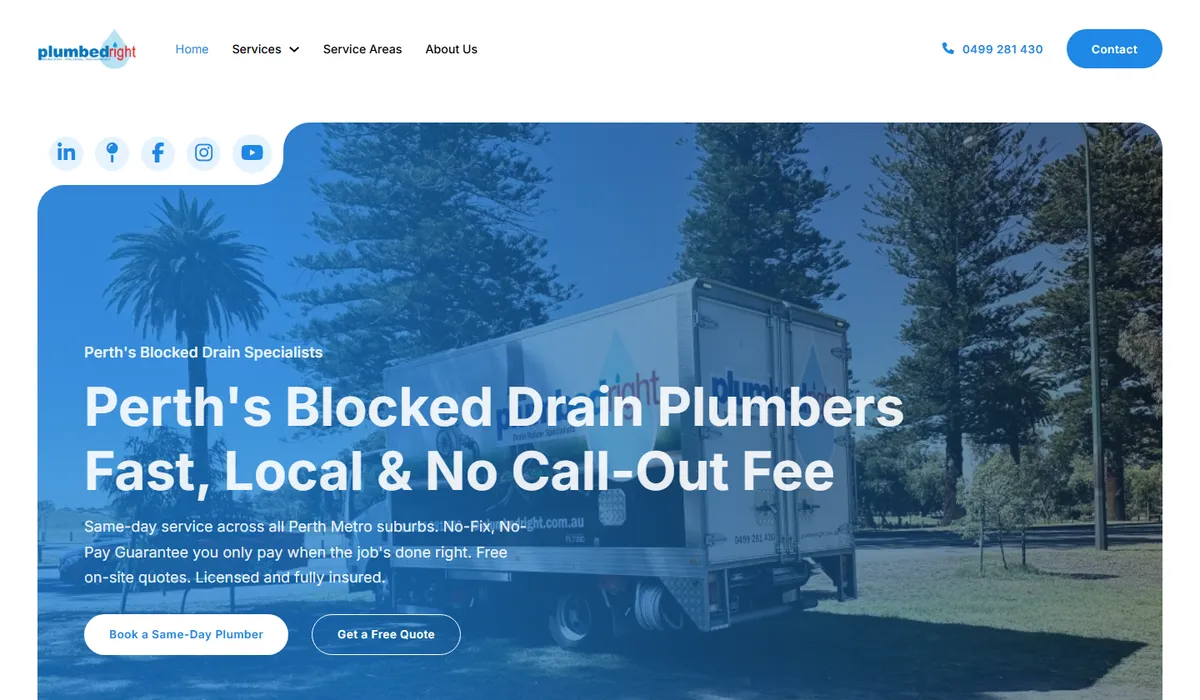
Plumbed Right
A plumbing business we have looked after for close to three years, site, video and ads under one roof.
We build and host their website, shoot and edit their video, and run their Google Ads with tracking wired in. Close to three years in, they are still with us.
See the build →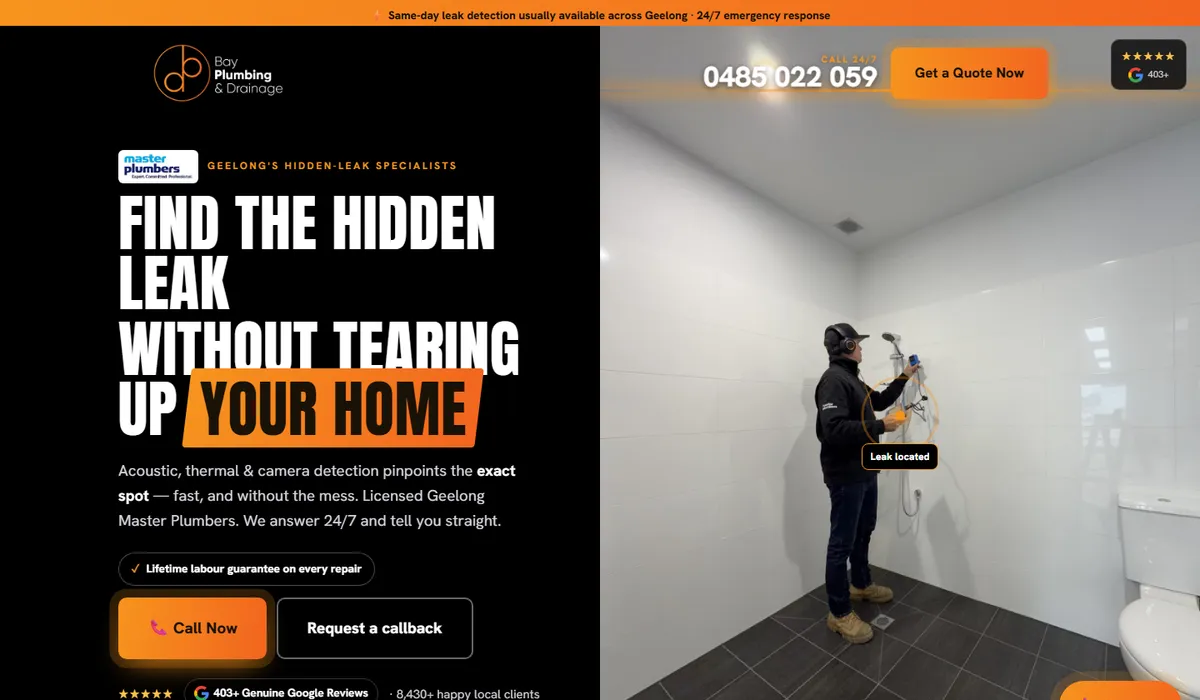
Plumbing & Drainage
Bay Plumbing & Drainage
A plumbing and drainage business set up with a fast site and ads built to book jobs.
A fast custom site built to turn visitors into calls, then Google Ads with proper conversion tracking so every dollar of spend is accountable.
See the build →You will not find enquiry, call or booked-job figures for either build here. We do not have written permission to share their numbers, so we do not share them. We will not put results on this page that we have not been cleared to publish.
// HOW WE BUILD IT
How we build websites for plumbers
Four steps and one fixed price. No discovery phase that bills for itself, no six-week silence. You know the number and the plan before anything starts.
Scope the jobs you want
We start with the work you want more of and the work you would rather stop taking. That decides the pages, not a template.
Write the pages
We write in your words, one page per service, using the terms customers actually search rather than trade jargon.
Build it fast
Hand-coded, no theme, no plugin stack. Tap-to-call, licence details and service areas are built in from the first screen.
Launch and keep it working
We put it live, keep it hosted and cared for, and change it as your services and your area change.
// PRICE & AFTERWARDS
One number up front, then we look after it
Plumbers get quoted enough vague numbers by other trades to know how it feels. You get one fixed price before work starts, and a plain answer about what happens once the site is live.
A single landing page is $1,500 + GST, which suits a plumber running Google Ads who needs one fast page to send them to. A full conversion website starts from $2,800 + GST, with a page per service, hosting and care included. The whole ladder, including the recorded website and ads audit, is on our pricing page.
- We host it and keep it fast, patched and backed up. There is no separate hosting bill to chase and nobody else to ring when something looks wrong.
- You own the site, the copy and the domain. If you ever leave, you take all of it with you.
- No lock-in contract. We would rather keep you because the phone rings than because you are stuck.
- Changes as your business changes. New service, new suburb, new licence details, we handle it.
// WHERE WE DO THIS
Where this work gets delivered
We are based in Darwin and work across Darwin, Palmerston and Katherine, with the rest of Australia handled online. The local page covers travel, timing and what changes when the job is in the Territory.
// QUESTIONS
Straight answers before you ask
Weighing up whether a new site is worth it for your plumbing business? Ask us directly and we'll give you a straight answer, no jargon, no pressure.
Get in touchHow much does a website for a plumbing business cost?
A single landing page is $1,500 + GST and a full conversion website starts from $2,800 + GST, with hosting and ongoing care included. You get one fixed number agreed before any work starts, not an hourly rate that grows.
Do I really need a separate page for every service?
For the services you want more work in, yes. Someone searching for a blocked drain and someone searching for a gas fitter are two different customers with two different questions. A page each lets you answer both properly, and gives search engines something specific to rank. Services you rarely do can stay as a section on a wider page.
Should my plumbing licence number be on the website?
Yes, and somewhere obvious. Plenty of customers check it, and the ones who do are usually the ones paying for bigger jobs. We put the licence number in the footer and on the contact page, alongside your insurance details, so it is never something a visitor has to hunt for.
Will a new website stop me paying hipages for leads?
Not overnight, and anyone promising that is guessing. What changes is that you own the asset. A lead that comes through your own site is not shared with two other plumbers and does not cost you a fee per enquiry. Most plumbers keep buying leads while the site and its rankings build, then wind the spend back as their own enquiries grow.
Can you build one page instead of a whole site?
Yes. A single landing page is $1,500 + GST and suits a plumber running Google Ads who needs one fast page for the ads to point at. If you want a page per service and room to be found in search over time, the full site is the better spend.
What happens after the site goes live?
We host it, keep it fast and secure, and update it as your services or service area change. There is no lock-in contract, and you own the site, the copy and the domain. If you ever move on, you take the lot with you.
// READY WHEN YOU ARE
Let's build the site they call you from
Tell us the jobs you want more of and the suburbs you cover. We'll come back with a plan and one fixed price. No pressure, no jargon, and a straight answer if a full site is not what you need yet.
Get a quote